
The “Desk Hips” Problem: How Tight Hip Flexors Can Trigger Low Back Pain
Share with a friend

Discover how tight hip flexors from long desk sitting can cause low back pain and learn gentle stretches, micro-breaks, and massage therapy tips for relief.
If you sit for work, you might know this feeling: your hips feel “stuck,” your stride feels shorter, and your low back starts to ache for no obvious reason. In my Toronto massage therapy practice, I hear this story all the time. Tight hip flexors can absolutely be part of the low back pain picture, especially when your day is built around long hours at a desk.
The good news is that “desk hips” is not a life sentence. It’s usually your body adapting to a position it’s in a lot. And with a few gentle shifts, your hips and low back can start to feel more like themselves again.
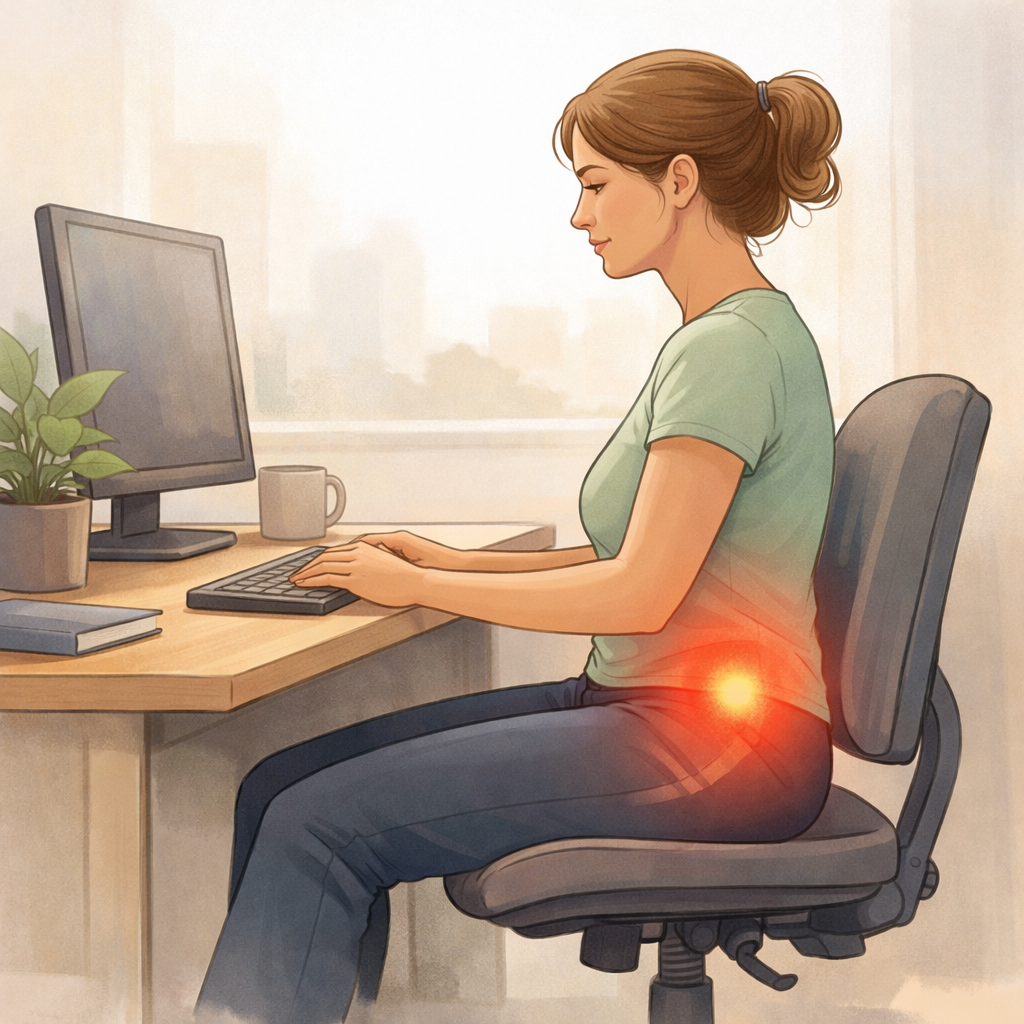
Long sitting hours can leave the front of the hips feeling shortened and cranky.
What are “desk hips,” really?
“Desk hips” is a simple way to describe what happens when your body spends a lot of time in hip flexion (hips bent). Your hip flexors are the muscles at the front of your hips that help lift your knee and bring your thigh forward.
When you sit for long stretches, those muscles don’t move through their full length as often. Over time, they can feel tight, guarded, or stubborn, especially when you stand up and try to walk, climb stairs, or extend your hip behind you.
This doesn’t mean your hips are “broken.” It usually means they’re doing exactly what bodies do: adapting to repeated positions.
How tight hip flexors can “spill over” into low back pain
One key hip flexor (the iliopsoas) has close relationships with the lumbar spine and pelvis. When the front of the hips feels short or overactive, it can change how your pelvis wants to rest and how your low back manages load.
In real-life terms, it can look like this:
- You stand up after sitting and feel a pinch in the front of the hip
- Your low back feels compressed or “grabby” when you straighten fully
- Your glutes feel sleepy, and your low back feels like it’s doing all the work
- Walking feels stiff for the first few minutes
Research has found links between reduced hip flexibility (including iliopsoas tightness) and low back pain in certain groups, and studies also suggest prolonged sitting may be associated with changes in hip extension and muscle stiffness.
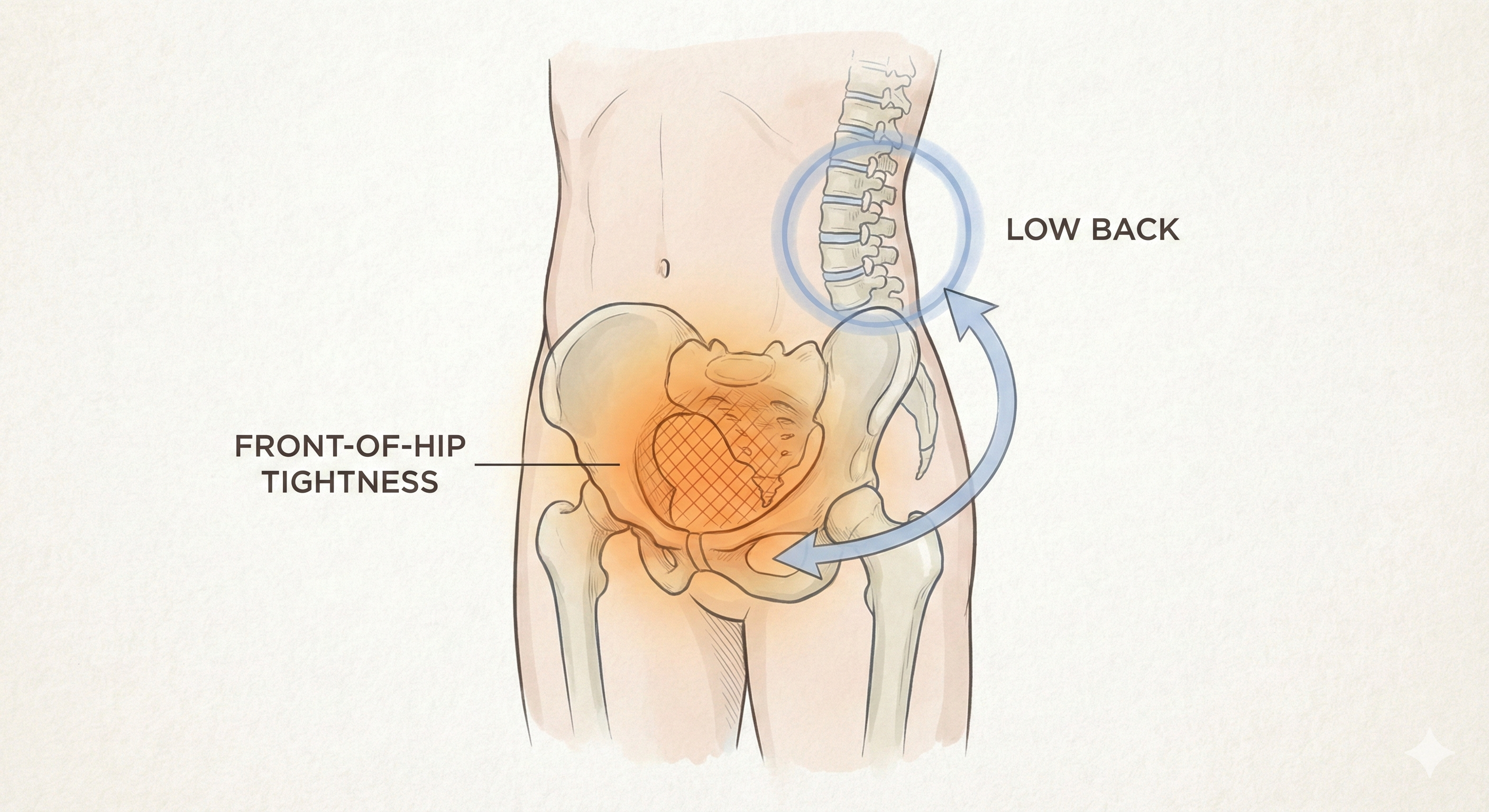
When the front of the hips feels restricted, the low back may try to compensate.
Signs you might be dealing with “desk hips”
See if any of these sound familiar:
- Low back discomfort that ramps up after long sitting
- A sense of tightness at the front of the hip when standing tall
- Shorter stride or difficulty taking a long step behind you
- Feeling better after walking for 5–10 minutes
- A mild pull in the low back during lunges, stairs, or uphill walking
A quick note: pain is always multi-factorial. “Desk hips” is often one piece of the puzzle, not the whole story.
When tightness through the hips and low back also involves symptoms that seem to travel down the leg, it can help to understand the sciatic nerve pathway and how it connects to the surrounding area.
A gentle “hip-to-back” reset you can try today
Nothing intense. No forcing. Think of this as giving your nervous system a little reminder that it’s safe to move.
1) Micro-breaks (the simplest win)
Every 30–60 minutes, stand up and take 30–60 seconds of movement: a short walk, a few easy leg swings, or simply shifting your weight side-to-side.
2) Supported hip flexor stretch (soft, not aggressive)
- Take a small split stance (one foot forward, one back)
- Keep your ribs stacked over your pelvis
- Gently shift forward until you feel a mild stretch at the front of the back hip
- Breathe slowly for 20–30 seconds, then switch sides
If you feel pinching in the front of the hip or sharp low back pain, ease off.
3) Wake up the glutes (tiny effort)
While standing, do 5–8 gentle glute squeezes (like you’re trying to lightly “zip up” your hips). No clenching your low back. Just a small signal.
There’s evidence that hip stretching and hip-focused interventions may help short-term pain and function in some people with non-specific low back pain, especially when hip motion is limited.
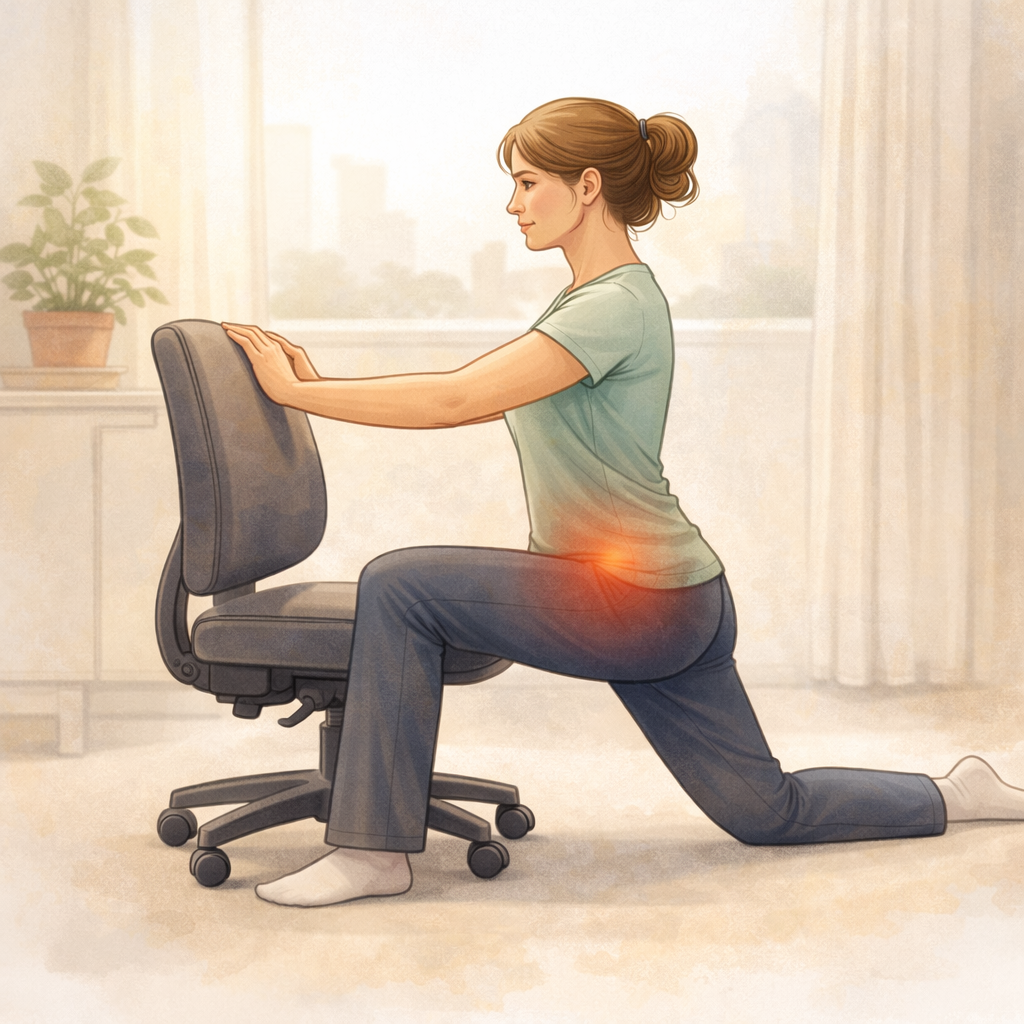
A small, supported stretch can be enough to remind the hips how to lengthen.
How massage therapy can help (especially when everything feels guarded)
When hip flexors are holding tension, it’s rarely just about “tight muscles.” Often, the whole area feels protective: hips, glutes, low back, even the breath.
Massage therapy can help by:
- Reducing protective muscle tone around the hips and low back
- Improving body awareness (so you can feel what’s working and what’s compensating)
- Supporting stress regulation, which matters because stress can amplify pain sensitivity
A broad evidence map of massage therapy for pain suggests massage can be helpful in some contexts, with effects often most noticeable in the short term, and best when paired with other supportive care like movement and education.
When to get extra support
It’s worth seeing a clinician if you have:
- Pain that travels down the leg, numbness, or tingling
- Weakness, changes in bladder/bowel function, or severe night pain
- Symptoms that are steadily worsening
- A history of significant injury or a recent fall
If it’s more of a “stiff hips + cranky back” pattern, that’s often very workable with a steady, gentle approach.
Ready to feel looser through your hips and lighter in your low back?
If you’re in Toronto and this sounds like you, I’d love to support you. In a session, we can calm the front of the hips, help your glutes come back online, and give your low back a break from doing everything alone.
Book a massage therapy session and we’ll create a plan that feels realistic for your workdays and your body.
Key Takeaways
- ✓Long hours of sitting can lead to “desk hips,” where hip flexors become tight and guarded, often contributing to low back discomfort.
- ✓Tight hip flexors, especially the iliopsoas, can alter pelvic position and load on the lumbar spine, making the low back feel compressed or overworked.
- ✓Common signs include front-of-hip tightness when standing tall, shorter stride, stiffness when first walking, and low back ache after prolonged sitting.
- ✓Gentle strategies like frequent micro-breaks, soft supported hip flexor stretches, and light glute activation can help reset hip and back comfort.
- ✓Massage therapy can reduce protective muscle tone, improve body awareness, and support stress regulation, working best alongside movement and education; seek clinical help if symptoms are severe, worsening, or involve nerve-related signs.
Frequently Asked Questions
How do I know if my hip and low back pain are from “desk hips” or something more serious?
Desk-hip-type pain usually feels like stiffness or tightness at the front of the hips and a cranky low back that ramps up after long sitting, eases a bit with walking, and may come with a shorter stride or a mild pull during lunges, stairs, or uphill walking. It often feels better after 5–10 minutes of movement. It’s worth seeing a clinician promptly if you notice pain traveling down the leg, numbness or tingling, weakness, changes in bladder or bowel function, severe night pain, symptoms that are steadily worsening, or a history of significant injury or a recent fall.
How often should I take movement breaks during the workday to help my hips and low back?
A simple starting point is a micro-break every 30–60 minutes. Stand up and move for 30–60 seconds—this can be a short walk, a few easy leg swings, or just shifting your weight side-to-side. The goal isn’t a workout; it’s to remind your hips and low back that they can move out of the sitting position regularly throughout the day.
What’s the safest way to stretch my hip flexors if they feel really tight from sitting?
Use a small, supported hip flexor stretch rather than a deep, aggressive one. Take a short split stance (one foot forward, one back), keep your ribs stacked over your pelvis, and gently shift your weight forward until you feel a mild stretch at the front of the back hip. Breathe slowly for 20–30 seconds, then switch sides. If you feel pinching in the front of the hip or sharp low back pain, ease off and reduce the depth or stop the stretch.
Can massage therapy actually help with tight hip flexors and low back pain from sitting?
Massage therapy can help by reducing protective muscle tone around the hips and low back, improving your awareness of which areas are working or compensating, and supporting stress regulation, which can influence how sensitive your pain system feels. Evidence suggests massage can be helpful for pain in some contexts, with effects often most noticeable in the short term and best when combined with movement and education—like the gentle stretches, micro-breaks, and glute activation described in the article.
What would a massage therapy session for “desk hips” look like with you in Toronto?
A session would focus on calming tension at the front of the hips (including the hip flexors), easing the low back, and helping your glutes “wake up” so your back isn’t doing all the work. We’d also explore simple, realistic strategies you can use between sessions—like micro-breaks, supported hip flexor stretches, and gentle glute squeezes—so your hips and low back feel more supported during your actual workdays. If you’re in Toronto, you can book a massage therapy session and we’ll create a plan that fits your body and schedule.
References & Citations
- [1] Mak et al., 2024- This systematic review maps the certainty and quality of evidence reported by systematic reviews in 2018 to 2023 of massage therapy for pain in adults.
- [2] Hatefi et al., 2021- The benefits of providing static stretching exercise targeting the hips in patients with non-specific Low Back Pain (NSLBP) are not well established. The objective of the study was to verify the effects of static stretching on function, pain and range of motion on patients with non-specific Low Back Pain (NSLBP).
- [3] Ceballos-Laita et al., 2023- Background Low-back pain (LBP) may be directly or indirectly related to impairments from the hip joint. Objective To evaluate the effectiveness of hip interventions on pain and disability in patients with LBP in the short-, medium-, and long-term.
- [4] Abbas et al., 2024- Background/Objectives: Hip muscle lengthening is commonly associated with the normal function of the lumbar spine and lower extremities. Some evidence correlates hamstring and iliopsoas tightness with low back pain (LBP).
- [5] Boukabache et al., 2021- Background It is possible that physical inactivity and prolonged sitting could lead to changes in muscle properties or bony limitations which may reduce passive hip extension. Objectives This study explored the association between passive hip extension and sitting/physical activity patterns.
Explore Our Complete Toronto RMT Guide
Looking for more information about massage therapy in Toronto? Our comprehensive guide covers everything from common conditions to treatment options.
View the Complete Guide