
Why Your Upper Back Feels Tight Even When You “Sit Properly”
Share with a friend

Upper back tightness can linger even with “good posture.” Often it’s from holding one position, shallow breathing, stress, and a stiff mid-back. Small shifts and massage can help you soften here, too.
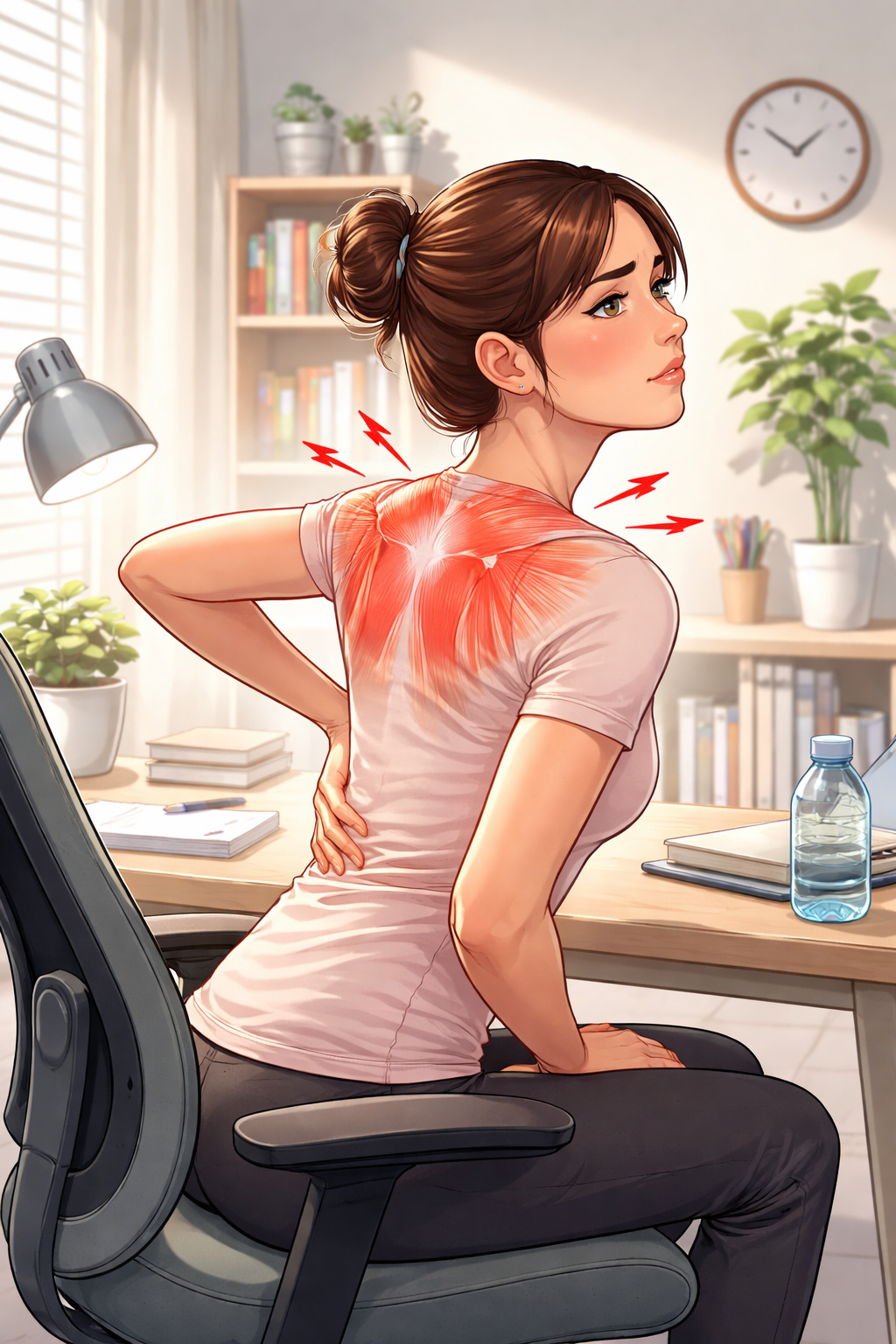
You’re sitting tall. Feet grounded. Screen at eye level. You’re doing all the “right” things, and still your upper back feels tight even when you sit properly.
If that’s you, I want you to hear this gently: you’re not failing at posture. Most upper-back tightness isn’t a posture problem. It’s often a staying-still problem, a bracing problem, or a your-body-is-working-harder-than-it-looks problem.
Let’s soften the mystery.
1) “Good posture” is not a single position you can hold all day
Even the most “aligned” sitting position becomes effortful if you hold it long enough. Your muscles start doing what muscles always do when they’re asked to stay on for hours: they fatigue, they guard, and they tighten.
A lot of people feel worse when they try to “sit properly” because they turn posture into a held pose. It becomes rigid. And your upper back ends up as the place that does the most work to keep you there.
Think of your body as something that needs small shifts, not perfect stillness.
2) Your upper back may be acting like a support beam
When you’re at a desk, your arms are constantly reaching forward: keyboard, mouse, phone, steering wheel, cooking, scrolling.
Even if your spine is upright, your shoulder blades and upper back muscles often stay subtly “on” to stabilize all that arm activity. Over time, that steady effort can feel like:
- a dense band between your shoulder blades
- a hot, tired ache at the base of your neck
- a “stuck” feeling when you try to straighten up or take a deeper breath
This is especially common if your arms don’t feel supported (no armrests, desk too high, laptop low, shoulders slightly lifted).
3) Your ribs and breathing can quietly feed upper-back tension
If your day is rushed or you’re concentrating hard, breathing often becomes smaller without you noticing. When the breath stays shallow, the body tends to recruit more “helper” muscles around the neck, shoulders, and upper chest.
That can leave your upper back feeling like it’s doing double duty: holding you up and assisting your breath.
You don’t need to force deep breathing. But noticing when your breath gets tiny can be a surprisingly kind clue.
4) Stress shows up in the shoulders, even with perfect ergonomics
This one is tender and very real.
When you’re focused, pressured, overstimulated, or trying to power through, the nervous system often chooses a familiar pattern: jaw tightens, shoulders lift, upper back braces.
Sometimes upper-back tightness is less about the chair and more about what your body is carrying internally.
I see this all the time in Toronto with desk workers, caregivers, students, and people in high-responsibility roles. Your body isn’t being dramatic. It’s trying to help.
If your tension extends into the shoulder itself, especially with overhead reaching or sleeping on one side, our interactive shoulder anatomy diagram covers the layered system of muscles and tendons that can contribute.
5) What helps, gently (without obsessing over posture)
Here are a few low-effort ways to invite your upper back to unclench:
- Change shape often. Even 20–30 seconds counts: stand up, lean back, let your arms hang, sit differently.
- Support your arms. If your shoulders are hovering, your upper back will pay for it. Bring the keyboard/mouse closer, use armrests, or add a pillow under one arm while you read.
- Let one exhale be longer. Not huge, not forced. Just a slow sigh-out and notice if your shoulders drop a millimetre.
- Warmth on the upper back. A warm shower or heat pack can help the body feel safe enough to soften.
- Get hands-on help when it keeps returning. Massage therapy can reduce that guarded “held” feeling and improve how your shoulders, ribs, and upper back move together.
If you ever notice numbness, tingling, weakness, dizziness, chest pain, or pain that’s rapidly worsening, it’s worth getting medical guidance alongside bodywork.
Book a session in Toronto (when you’re ready)
If your upper back keeps tightening even when you’re “doing everything right,” I’d love to help you unravel it gently.
In a session, we can work with the areas that commonly feed this pattern: upper back and shoulder-blade muscles, chest/front body tightness, neck and jaw holding, and that overall “braced” nervous system feeling.
You can book an Aurelia RMT massage therapy session in Toronto, and we’ll take it one careful layer at a time.
Key Takeaways
- ✓“Perfect posture” held too long still leads to muscle fatigue and tightness; your body needs frequent small position changes, not rigid stillness.
- ✓Your upper back often works as a support beam for constantly reaching arms, especially when your arms or shoulders aren’t well supported at your desk.
- ✓Shallow, rushed breathing recruits extra helper muscles in the neck and upper back, quietly adding to that dense, achy, or ‘stuck’ feeling.
- ✓Stress, focus, and pressure can make your nervous system brace—jaw tightens, shoulders lift, upper back guards—even if your ergonomics are ideal.
- ✓Gentle strategies help more than obsessing over posture: change shape often, support your arms, lengthen one exhale, use warmth, and seek massage or medical guidance if symptoms are persistent or concerning.
Frequently Asked Questions
Why does my upper back still feel tight even when I’m sitting with “good posture”?
Because posture isn’t a single perfect position you can hold all day. Even a very aligned sitting position becomes tiring when you stay in it for too long. Your muscles start to fatigue and guard, especially in the upper back, which often works hardest to keep you in that held pose. The issue is usually more about staying still and bracing than about you “failing” at posture.
Could my desk setup be making my upper back work harder than I realize?
Yes. When you’re at a desk, your arms are almost always reaching forward to the keyboard, mouse, phone, or steering wheel. If your arms aren’t well supported—no armrests, desk too high, laptop too low—your shoulder blades and upper-back muscles stay subtly “on” to stabilize everything. Over time, that steady effort can feel like a dense band between your shoulder blades, a hot ache at the base of your neck, or a stuck feeling when you try to straighten up or breathe deeply.
How does my breathing affect my upper-back tension?
When you’re rushed, stressed, or concentrating, your breathing often becomes smaller and shallower without you noticing. With smaller breaths, your body recruits more helper muscles around the neck, shoulders, and upper chest. That means your upper back is not only holding you upright but also assisting your breathing, which can increase tightness. You don’t need to force big breaths—simply noticing when your breath gets tiny and letting one exhale be a bit longer can help your upper back soften.
Is stress really enough to cause this much tightness in my shoulders and upper back?
Yes. When you’re under pressure, overstimulated, or pushing through a lot, your nervous system often defaults to a familiar pattern: jaw tightens, shoulders lift, and the upper back braces. This can happen even with great ergonomics. In many people—especially desk workers, caregivers, students, and those in high-responsibility roles—the upper-back tightness is less about the chair and more about what the body is carrying emotionally and mentally.
What can actually help my upper back feel better without obsessing over posture?
Gentle, frequent changes and support tend to help more than rigid “perfect” posture. Shift positions often, even for 20–30 seconds at a time. Support your arms with armrests, a better desk setup, or a pillow so your shoulders don’t hover. Let one exhale be slightly longer and notice if your shoulders drop a little. Use warmth, like a shower or heat pack, to help your body feel safe enough to release. If the tightness keeps returning, hands-on help like massage therapy can address the upper back, shoulder blades, chest, neck, jaw, and the overall braced feeling in your nervous system, and is especially helpful to explore in person if you’re in Toronto.
References & Citations
- [1] Heneghan et al., 2018- Sedentary behaviour has long been associated with neck and low back pain, although relatively little is known about the thoracic spine. Contributing around 33% of functional neck movement, understanding the effect of sedentary behaviour and physical activity on thoracic spinal mobility may guide clinical practice and inform research of novel interventions.
- [2] Christensen et al., 2023- Introduction Sitting posture may contribute to spinal pain. Effects of postures on pain, sensitivity and muscle activity during computer tasks were investigated.
- [3] Shahidi et al., 2013- Physical and psychosocial stressors in the workplace have been independently associated with the development of neck pain, yet interactions among these risk factors remain unclear. The purpose of this study was to compare the effects of mentally challenging computer work performed with and without exposure to a psychosocial stressor on cervical muscle activity and posture.
- [4] Mahmoud et al., 2019- Purpose of Review Forward head posture (FHP) is the most common cervical postural fault in the sagittal plane that is found with different severity levels in almost all populations. Despite claims that FHP may be related to neck pain, this relation seems to be controversial. Thus, our purpose is to determine whether FHP differs between asymptomatic subjects and those with neck pain and to investigate if there is a relationship between head posture and neck pain.
- [5] Cefalì et al., 2025- Background: Given the relationship between reduced pulmonary and respiratory muscle function in neck pain, incorporating breathing exercises into neck pain management may be beneficial. Purpose: The purpose of this study was to investigate the benefits of breathing exercises for treating neck pain.
Explore Our Complete Toronto RMT Guide
Looking for more information about massage therapy in Toronto? Our comprehensive guide covers everything from common conditions to treatment options.
View the Complete Guide